Core Drilling Through Concrete: What to Know Before You Book
A clean, round hole through concrete takes the right bit, the right size and a few details from you before the crew arrives.
October 13, 2026 · 4 min read
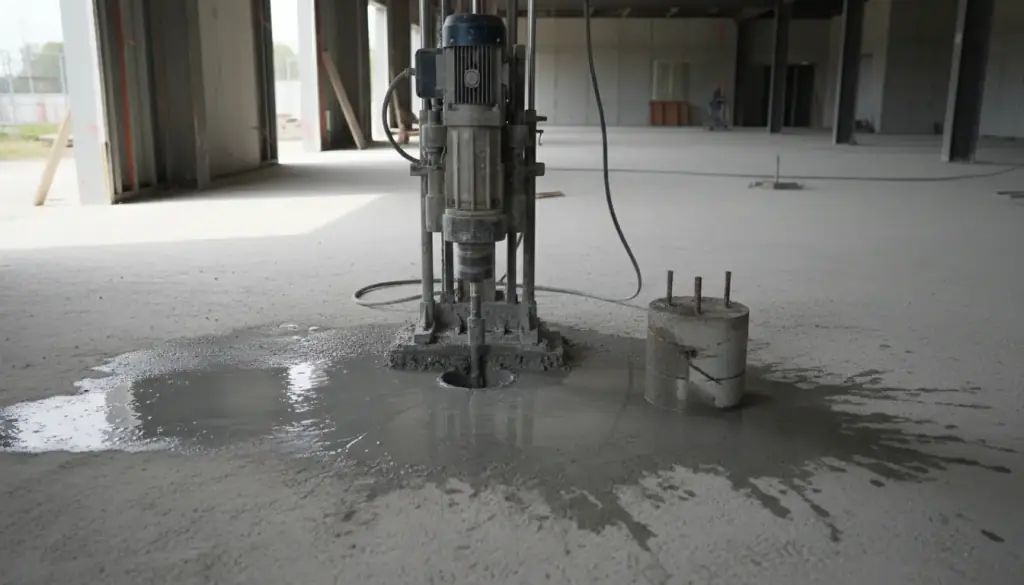
Nobody knows exactly where every pipe, conduit and duct will end up before the slab is poured. Plans change, trades arrive late, and a tenant moves a wall. Core drilling is how a line gets through concrete after the fact. A diamond or carbide bit cuts a clean, round hole, and the concrete around it stays intact. A little preparation on your end makes the hole land where it should and keeps the crew from losing time on the day.
What core drilling is used for
Most holes are for utilities. Electricians need a path for conduit. Plumbers need an opening for a drain or supply line. HVAC crews need room for refrigerant lines, ducts and condensate drains. Phone lines and sewer lines go through concrete the same way. Each of those trades usually knows the diameter it needs, so the number should come from them, not from a guess on site.
Core drilling also handles a job that surprises people. A bit can drill out an existing anchor so it can be repaired, moved or replaced. When an anchor was set in the wrong spot, or a fixture needs to shift a few feet, drilling around the anchor removes it cleanly instead of chipping at the surrounding concrete.
- Electrical conduit and cable openings
- Plumbing supply and drain penetrations
- HVAC lines, ducts and condensate drains
- Phone, data and sewer line openings
- Drilling out existing anchors for repair, relocation or replacement
Diamond bits and carbide bits
A core bit cuts one of two ways. Diamond bits have diamond segments bonded to a steel barrel, and they grind through dense concrete and the steel inside it. They're usually run with water, which cools the bit and carries the slurry away. Carbide bits have carbide teeth and tend to suit softer material and lighter work. Osborn Concrete Cutting drills with both diamond and carbide bits, so the bit can be matched to the material in front of it.
What decides it is the concrete. Age, strength, aggregate and the rebar inside all change how a bit behaves. If you know the slab is post-tensioned or heavily reinforced, say so before the crew shows up. A cutter will usually want to know what's inside the slab before drilling, because hitting a cable or a bundle of bars is a different job than drilling clean concrete. Osborn says it can test to make sure your concrete structure is safe to work on, and that's worth asking about whenever you're unsure.
How size and depth get chosen
Diameter comes from what's passing through the hole, plus room around it for a sleeve, sealant or firestop material. Your plumber, electrician or mechanical contractor should give you the finished size, and your engineer decides whether a given hole is acceptable in a given spot. The cutter's job is to drill that size accurately, not to pick it.
Depth comes from the thickness of the slab or wall, and sometimes from something far thicker. Osborn drills cores up to 42 inches in diameter and 50 feet deep, and can adjust to exact specs. Most penetrations for pipe and conduit are a small fraction of that, but it helps to know the range is there when a job involves a thick footing, a pier or a deep run.
Two other details matter. The first is spacing. Holes drilled close together, or close to an edge, raise a question for the engineer, so share the layout before anyone marks it. The second is direction. A vertical hole through a floor and a horizontal hole through a wall use different rigs and different set-ups, so tell the cutter which one you've got.
What to tell the cutter before they arrive
A call that covers the following details saves a second trip and a lot of guessing. Have the answers ready, or know who on the job does.
- How many holes, and the diameter of each
- Slab or wall thickness, and whether you can see the underside
- Whether the concrete is reinforced, post-tensioned or has embedded conduit
- Where each hole goes, with layout marks on the surface if you can
- What's below or behind, such as ceilings, occupied rooms or buried utilities
- Where the crew can get water and power, and where the slurry can go
- How the crew gets equipment to the spot, including stairs, elevators and door widths
Marking the layout yourself, with paint or a chalk line, avoids confusion. If a hole is going to land near something you can't see, say so. A cutter can usually check before drilling, and it's far easier to find out first than to find out with the bit already in the slab.
Osborn Concrete Cutting gives free estimates on core drilling. Call (256) 489-7514, Monday to Friday, 7 AM to 5 PM. We're based at 828 Demasters Avenue NW in Huntsville and work across Alabama and surrounding states.
Osborn Concrete Cutting, (256) 489-7514
Call (256) 489-7514More articles
Cutting a Doorway in a Concrete Wall: How Track Sawing Works
Wall sawing turns a solid concrete wall into a finished opening, and the prep you do decides how smoothly it goes.
Removing a Concrete Patio: Why Sawing Beats Breaking
Cutting a patio into liftable sections is quieter, neater and easier on everything around it than a day with a breaker.